
Case studies
From drawing to finished part
Real fastener production problems and the machine and tooling setups used to solve them.
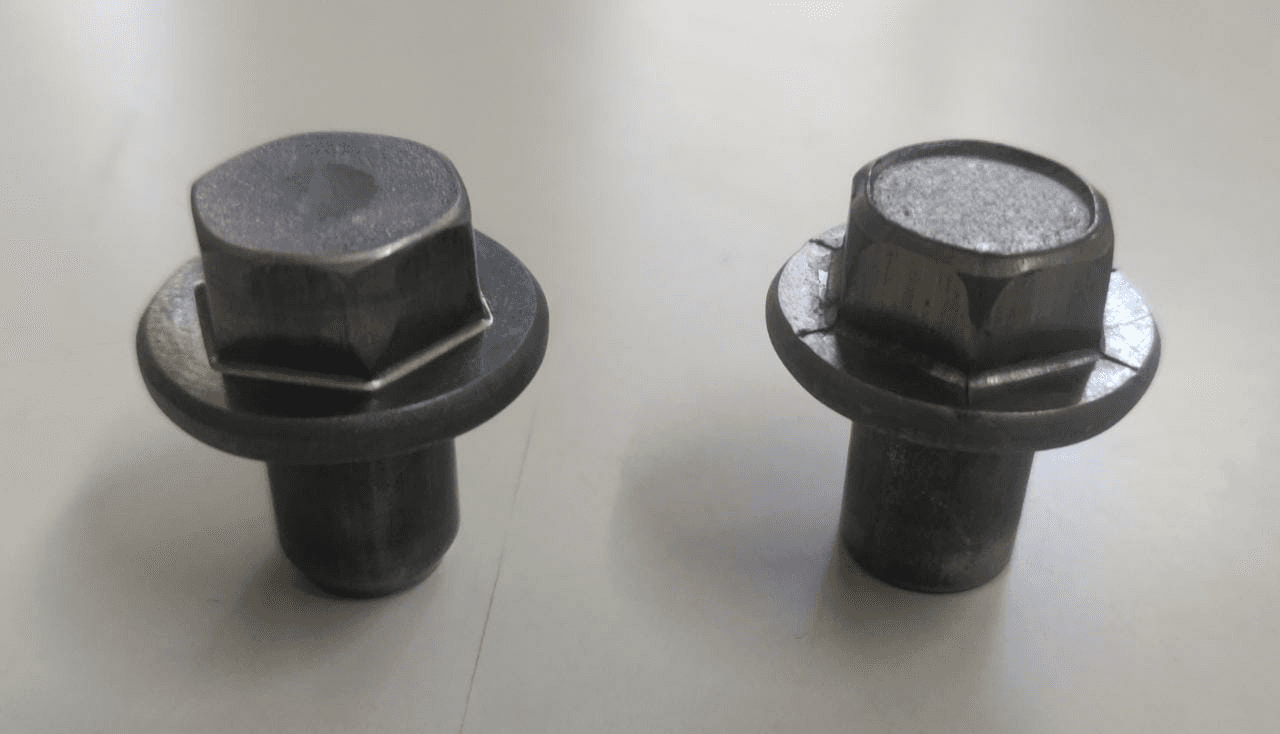
Cleaner Hex Flange Heads with the Extrusion Punch
The parts on the left were formed with our extrusion punch; the parts on the right with a conventional punch. With our punch, material flows evenly into the hex and flange. Hex corners fill completely, the flange edge stays smooth and round, and the cracks and folds at the hex-to-flange transition are eliminated. The result is a stronger, better-looking head, fewer rejects, and less secondary trimming or inspection.
Read case study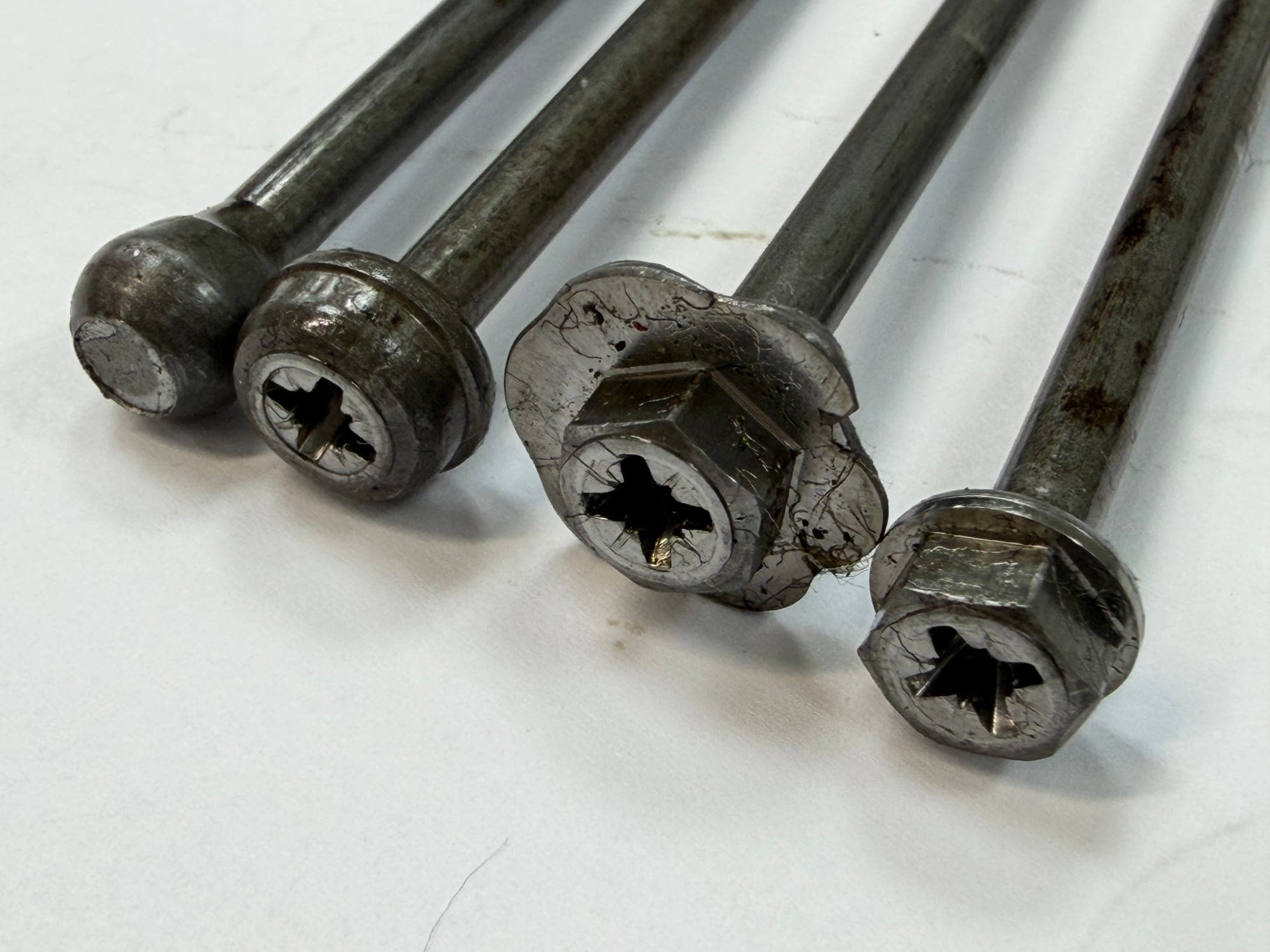
Double Trim - Hex Flange Head Screw with Pozi Recess
cold heading stage: rounded preform, round head with cross recess, trimmed hex head with untrimmed flange, and finished trimmed flange head.
Read case study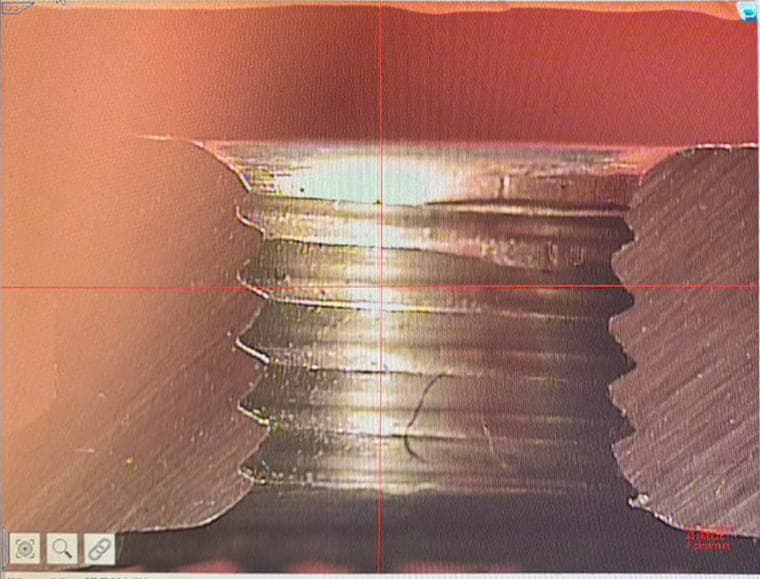
Feed Mismatch in Tapping
In tapping, the tap has to advance exactly one thread pitch for every revolution. Feed mismatch happens when the machine’s feed rate doesn’t match the tap’s pitch, so the tap advances too fast or too slow. When that happens, the machine pushes or holds back the tap as it cuts. The tap loads one flank more than the other, which leads to: Oversize or distorted threads that fail go/no-go gauges Torn or rough flanks that weaken the thread Inconsistent profiles from one hole to the next Excess tap wear and breakage from added axial stress
Read case studyNo Head Full Thread Screw
A full-thread screw without a head is difficult to feed and orient consistently, which affects threading stability and operator effort.
Read case studyHave a part drawing or machine requirement?
Send us your drawing, target production speed, material, and product dimensions. Our team will help review the suitable machine and tooling setup.